

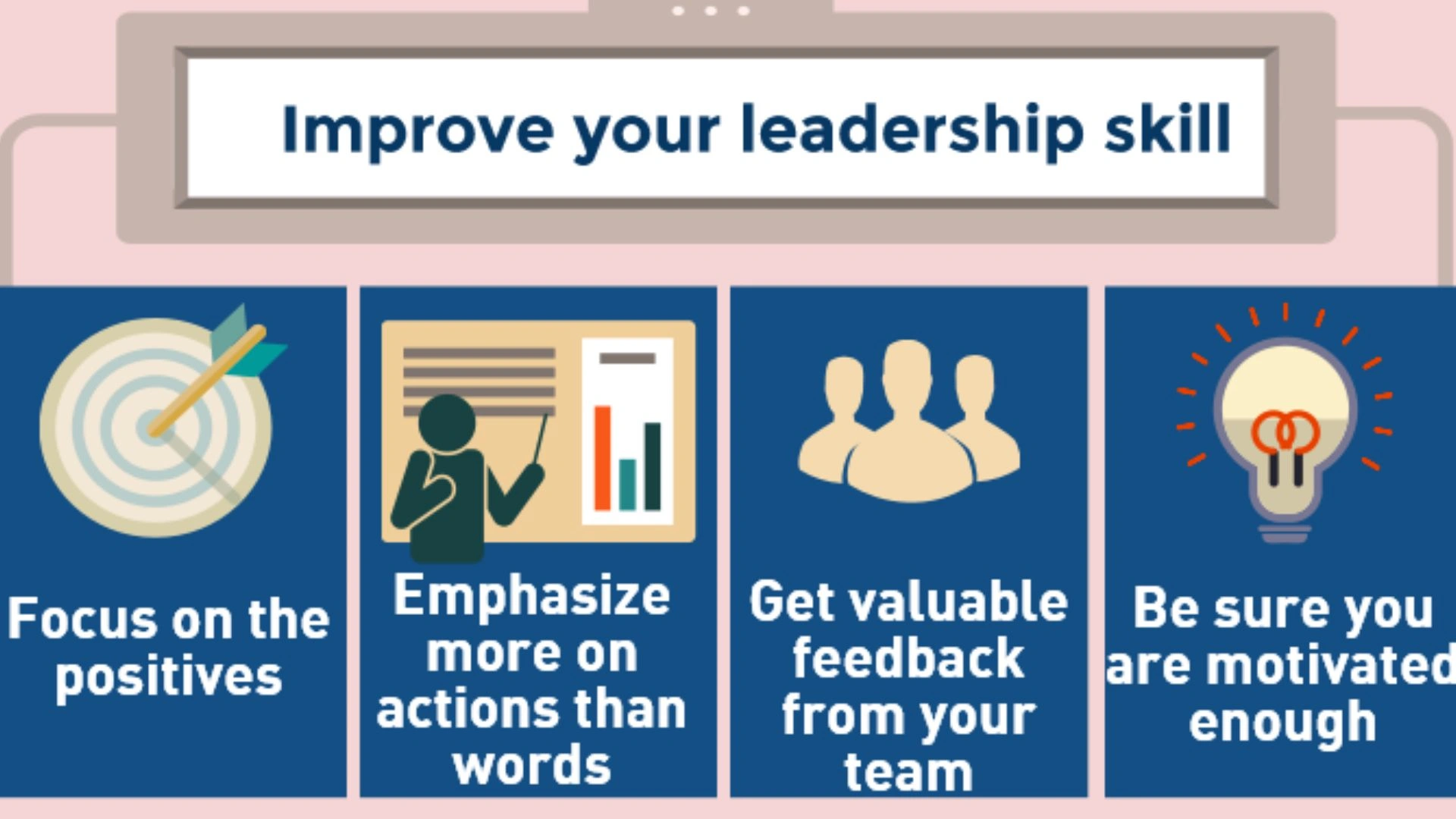
Leadership isn’t really about the title on your email signature or being the one who gets the final say. It’s about helping people do their best work, making sound calls under pressure, communicating in a way people actually understand, and creating the kind of environment where others can grow.
Here’s the encouraging part: leadership isn’t some fixed personality trait you either have or don’t. Most of the behaviors that separate a good leader from an average one can be learned and sharpened through deliberate practice.
That’s not just a feel-good line, either. Gallup has found that managers account for at least 70% of the variance in team-level engagement, and their most recent numbers show only 31% of U.S. employees were actually engaged at work in 2025. Whatever stage you’re at, a brand-new manager, seasoned executive, team lead, or someone gearing up for their first leadership role getting better at this stuff has a direct line to both your team’s results and your own career.
What Does “Improving Leadership Skills” Actually Mean?
It means building the behaviors and capabilities that let you guide people well and that’s a bigger basket than just communication or decision-making. Real leadership blends self-awareness, emotional intelligence, strategic thinking, accountability, delegation, coaching, adaptability, and the ability to earn trust.
The Center for Creative Leadership points to four core skills that hold up across roles and career stages: self-awareness, communication, influence, and learning agility (CCL).
In practice, improving as a leader comes down to honestly answering questions like:
- How well do I actually listen to my team?
- Can I give feedback that’s useful without being discouraging?
- Do people know what I expect from them?
- Can I make a hard call when I don’t have all the information?
- Am I delegating well, or just offloading tasks?
- Do I handle conflict like an adult?
- Am I actually helping people grow?
- Do people trust what I say and what I do?
Those questions tell you a lot more about your leadership than any job title ever will.
1. Start With Self-Awareness
Understanding yourself is one of the most underrated steps in becoming a better leader.
Your style, good or bad, ripples out to everyone around you. Get impatient when things get stressful, and your team quietly stops bringing you problems. Rarely acknowledge good work, and people start to feel invisible.
Self-awareness is what lets you catch these patterns before they calcify.
A simple way to start: ask a few trusted colleagues for honest feedback, and keep a short leadership journal after important meetings. After a tough conversation or a big decision, ask yourself:
- What went well?
- Where did communication break down?
- Was I actually listening, or just waiting to talk?
- How did people react to what I decided?
- What would I do differently next time?
It’s a small habit, but it surfaces patterns you’d never notice on your own.
A quick example. Picture a manager who interrupts people a lot in meetings. In their own head, it reads as enthusiasm and efficiency. To the team, it often reads as “my opinion doesn’t matter here.” Once that manager notices the pattern, the fix is almost embarrassingly simple: pause, actually listen, ask a follow-up question before jumping in. That small shift is leadership development, in miniature.
2. Sharpen Your Communication
Communication sits near the top of every leadership-skills list for a reason leaders are constantly transmitting priorities, expectations, feedback, decisions, and vision, whether they mean to or not.
Good communication isn’t about talking more. It’s about making the message land clearly the first time. A few habits that help:
- Explain the why behind important decisions, not just the decision itself
- Set expectations clearly instead of assuming they’re obvious
- Ask before you assume
- Actually listen instead of jumping straight to solving
- Adjust your style depending on who you’re talking to
- Check that the message landed the way you meant it
One easy fix: swap vague instructions for specific outcomes. Instead of “we need to improve this report,” try something like: “Please update the report with the latest sales figures, add a comparison to last quarter, and send the revised version by Thursday afternoon.” Now the person knows exactly what’s expected, what “done” looks like, and when it’s due.
Practice active listening. This matters most when there’s disagreement in the room. Rather than mentally drafting your response while the other person is still talking, focus on actually understanding their point then reflect it back. Something like: “So your concern is that the deadline is doable, but the current staffing puts quality at risk is that right?” That kind of reflection alone can defuse a lot of unnecessary tension, and it signals that the other person was actually heard.
3. Get Better at Giving Feedback
Good leaders don’t dodge hard conversations, they just get better at having them.
Useful feedback is specific, well-timed, and aimed at behavior rather than personality. “You’re not a good communicator” doesn’t give anyone anything to work with. Something like this does: “In yesterday’s client meeting, the project timeline didn’t come across clearly. Next time, let’s walk through the three key milestones before getting into the details.”
A structure worth borrowing: Situation → Behavior → Impact → Next step.
- Situation: During Monday’s team meeting
- Behavior: You changed the project priority without explaining why
- Impact: Several people were left unsure which deadline actually mattered
- Next step: Walk through the reasoning and expected outcome when priorities shift like this
That structure keeps feedback actionable instead of personal, which is usually the difference between feedback that lands and feedback that just stings.
4. Learn to Actually Delegate
A lot of new managers struggle here because doing it themselves feels faster. And sometimes it is in the short term. It’s almost never sustainable.
Delegating well means more than just handing off a task. A strong leader spells out:
- What needs to happen
- Why it matters
- What authority the person has to make decisions
- What resources they have to work with
- When it’s due
- How progress will get reviewed
A quick example. Say you’ve always written the weekly performance report yourself. Instead of continuing that indefinitely, you train someone on the team to draft it, then review it together for a few weeks. They pick up a new skill, you get time back for more strategic work, and the team isn’t bottlenecked on one person anymore. That’s the delegation doing its job.
5. Build Emotional Intelligence
Technical skill might get you promoted. Emotional intelligence is usually what determines whether you’re actually good at the job once you’re in it.
It comes down to understanding your own emotions, reading how others are feeling, and managing your reaction instead of just having one.
Say someone on your team misses an important deadline. A reactive leader jumps straight to criticism. A more emotionally intelligent one starts with, “What happened?” Maybe they misunderstood the priority. Maybe another project ate up more time than expected. Maybe there’s a real performance issue underneath it. Asking first doesn’t mean skipping accountability, it means having enough information to actually respond well, instead of just reacting.
This kind of intelligence matters most exactly when things are hardest: during conflict, layoffs, reorganizations, performance issues, or general uncertainty.
6. Sharpen Your Decision-Making
Leadership runs on decisions, some easy, plenty of them messy, involving incomplete information, competing priorities, or real financial risk.
A repeatable process helps. Before a significant decision, it’s worth working through:
- What problem are we actually trying to solve?
- What do we know?
- What don’t we know?
- What are the realistic options?
- What are the likely consequences of each?
- Who does this affect?
- What does it cost us to wait?
Don’t hold out for perfect information; it rarely arrives. Good leaders learn to recognize when they have enough to act. And afterward, it’s worth reviewing what happened. If the call was wrong, the useful move is learning from it, not defending it out of pride.
A leader who can say, “I got this wrong, here’s what I learned,” tends to build more trust than one who never admits a misstep.
7. Get Comfortable Managing Change
Change is just part of the job now. Technology shifts, customer expectations shift, teams shift, and AI is reshaping how a lot of organizations operate day to day.
When you’re rolling out a change, three things need to be clear:
- What’s actually changing: Spell out the practical difference people should expect.
- Why it’s changing: Tie it back to a real business or customer need.
- What happens next: Give people a concrete path forward.
If a company rolls out a new AI-assisted workflow and just announces it, that alone can spark anxiety. A better approach explains what the tool will and won’t do, how people will be trained, and how their day-to-day work actually changes. People tend to support change a lot more readily once they understand it.
8. Become More of a Coach
Leadership isn’t only about pushing work forward it’s also about growing the people doing the work.
A coaching mindset changes how you show up as a manager. Instead of handing out answers immediately, try questions like:
- “What do you think is causing this?”
- “What have you already considered?”
- “What would you try first?”
- “What do you need from me?”
- “What did you take away from this?”
This builds judgment in the people you lead, instead of leaving them dependent on you for every decision.
9. Earn Trust Through Consistency
Trust isn’t built with a single gesture, it’s built through repetition. People notice whether you actually do what you said you’d do.
If you say you’ll look into an issue, follow through. If you make a mistake, own it. If you expect open communication from your team, model it yourself first.
Fairness matters here too not in the sense of treating everyone identically, but in making decisions based on clear, consistent principles people can actually understand.
A leader who’s consistent, transparent, and willing to be accountable creates real psychological safety. People start raising concerns earlier, sharing ideas more freely, and admitting mistakes before they snowball, which is often the difference between catching a small problem early and cleaning up an expensive one later.
10. Make Learning Part of the Routine, Not a One-Time Project
You don’t “fix” your leadership once and move on. Your responsibilities keep changing, and the skills that got you through leading five people won’t necessarily carry you through leading fifty. A first-time manager and a senior executive are dealing with genuinely different problems.
A simple routine helps keep this from turning into a vague, ongoing intention that never actually happens.
A 30-Day Leadership Improvement Plan
Week 1 — Self-awareness: Ask two people you trust for honest feedback on your communication, decision-making, and general style.
Week 2 — Communication: Practice active listening in every important conversation. Ask at least one follow-up question before responding.
Week 3 — Delegation: Pick one recurring task that someone else on the team could learn to own.
Week 4 — Coaching: Have one real, structured development conversation with each direct report.
At the end of the month, take stock of what actually shifted then pick the next skill and repeat. It’s a far more workable approach than trying to overhaul your entire leadership style overnight.
Making Leadership Development Practical
Leadership development doesn’t have to live only in corporate training sessions or management textbooks. Resources like Leadership Lessons and You offer another angle: practical lessons, personal reflection, and real-world stories that get at the same idea from a different direction: leadership isn’t just something you exercise when you happen to have authority.
It shows up in your everyday choices, your relationships, your accountability, and how you treat the people around you.
For anyone looking to build a stronger leadership mindset alongside real workplace experience, that kind of resource can be a useful complement. The core lesson stays the same either way: leadership development works best as an ongoing habit, not a one-time fix.
How Long Does This Actually Take?
There’s no single answer. A specific behavior can shift within a few weeks of deliberate practice. A genuinely different leadership style takes a lot longer to settle in.
One workable approach is tackling one skill per month:
- Month 1: Communication
- Month 2: Delegation
- Month 3: Feedback
- Month 4: Coaching
- Month 5: Decision-making
- Month 6: Strategic thinking
The goal was never perfection, it’s measurable progress. Ask for feedback, practice on purpose, look honestly at the results, and adjust.
FAQ
What are the best ways to improve leadership skills?
Practicing active listening, seeking out honest feedback, sharpening communication, learning to delegate, coaching your team, handling conflict directly, making decisions deliberately, and reflecting regularly on your own performance.
What are the essential leadership skills?
Communication, self-awareness, emotional intelligence, decision-making, delegation, strategic thinking, adaptability, conflict management, coaching, and relationship-building all rank near the top.
Can leadership skills actually be learned?
Yes. People start with different natural strengths, but most leadership behaviors can be developed through feedback, coaching, real experience, and deliberate practice.
How can I improve my leadership skills at work?
Pick one behavior that’s directly relevant to your current role, ask your manager or colleagues for honest feedback on it, practice it consistently, and track whether your interactions and results start to shift.
What’s the single most important leadership skill?
There isn’t one that works everywhere. But self-awareness and communication tend to be foundational, since they shape how well you’re able to use everything else decision-making, coaching, delegation, conflict management, all of it.
Also Read: Leadership Importance
One Comment
Comments are closed.