

A leader can have strong technical knowledge, years of experience, and an impressive title and still struggle to lead people effectively.
Why?
Because leadership is not only about what you know. It is also about how you respond when someone disagrees with you, how you handle pressure, whether you notice when your team is struggling, and whether people feel heard when they work with you. That is where emotional intelligence becomes important.
Emotional intelligence in leadership is the ability to understand and manage your own emotions while recognizing and responding appropriately to the emotions of other people. It helps leaders communicate with greater awareness, manage conflict, build trust, and make better decisions without allowing emotions to take over.
This matters in today’s workplace. Gallup’s 2026 global workplace report says the U.S. and Canada region had 31% employee engagement in 2025. Gallup also reports that managers account for 70% of the variance in team engagement. The regional figure is combined for the U.S. and Canada rather than U.S.-only.
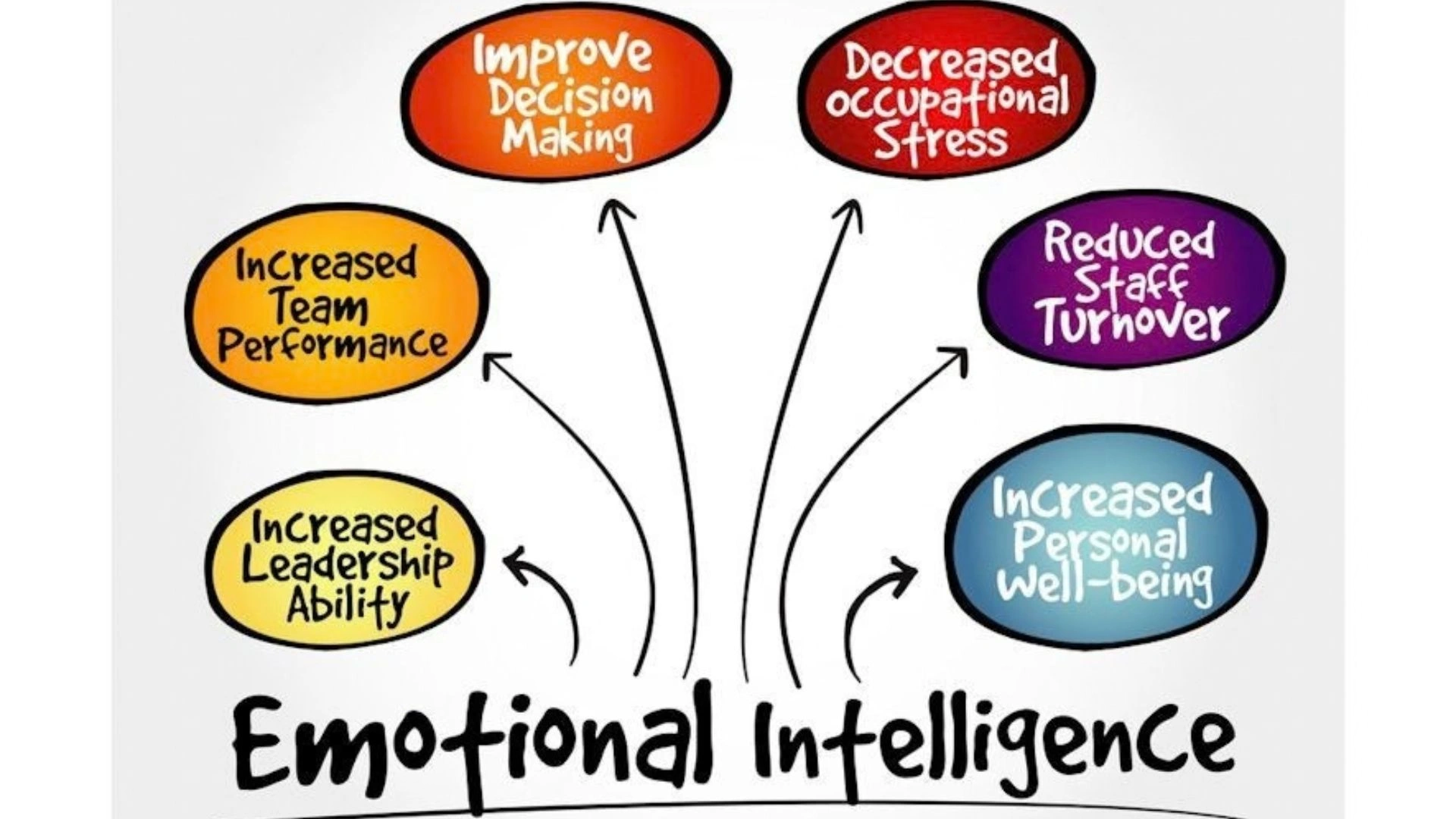
Recent research also continues to examine the relationship between emotional intelligence and leadership. A 2026 systematic review and meta-analysis reported a positive relationship between emotional intelligence and team effectiveness and between emotional intelligence and transformational leadership. The review included 22 studies in the systematic review and 15 documents in its meta-analysis. These findings show an association, not proof that emotional intelligence alone causes better team results.
So what does emotional intelligence actually look like in practice? And how can leaders improve it? Let’s break it down.
What Is Emotional Intelligence in Leadership?
Emotional intelligence in leadership means using awareness of emotions to lead yourself and interact more effectively with other people.
- It does not mean being agreeable all the time.
- It does not mean avoiding difficult conversations.
- It does not mean putting feelings ahead of business results.
Instead, it means understanding what is happening emotionally so you can respond with better judgment. For example, imagine an employee challenges your decision during a meeting.
A leader with low emotional awareness might immediately feel attacked and respond defensively.
A leader with stronger emotional intelligence may notice the initial reaction and pause before responding:
“Tell me more about the concern. What do you think we may be missing?”
The decision may remain the same. The conversation, however, can be much more productive. The Center for Creative Leadership describes four major areas in emotional intelligence development: self-awareness, self-management, social awareness, and relationship management. These four areas provide a useful framework for leaders.
Four Emotional Intelligence Skills Leaders Need
1. Self-Awareness
Self-awareness is the foundation of emotional intelligence. It means recognizing your own emotions, reactions, strengths, weaknesses, and behavioral patterns.
Consider a manager who becomes impatient when projects fall behind schedule. Without self-awareness, the manager may immediately start sending demanding messages or criticizing employees. With self-awareness, the manager can recognize:
“I’m frustrated because the deadline is approaching. I need to understand what is causing the delay before I react.”
That small pause can change the outcome.
How to build self-awareness
Start paying attention to your emotional triggers. Ask yourself:
- What situations make me defensive?
- When do I become impatient?
- How do I respond when someone disagrees with me?
- Do I become quieter under pressure?
- What feedback do I tend to resist?
- How might other people experience my leadership style?
The Center for Creative Leadership identifies self-awareness as one of its fundamental leadership capabilities because leaders need to understand how their behavior affects others. A simple leadership journal can help.
After an important meeting, write down what happened, what you felt, how you responded, and what you might do differently next time. That is practical emotional intelligence skills development.
2. Self-Management
Self-awareness tells you what you are feeling. Self-management helps you decide what to do with that feeling.
Every leader experiences frustration, fear, excitement, disappointment, and stress. Emotional intelligence does not eliminate those emotions. It helps you regulate your response.
Imagine a customer sends an angry email criticizing your team. Your first reaction may be:
“This is completely unfair.”
You could reply immediately. Or you could step away, review the facts, and respond after you have had time to think.
The second approach does not mean ignoring the problem. It means separating the emotional reaction from the professional response.
A simple self-management technique
Use the Pause → Assess → Respond method.
- Pause: Do not respond immediately when emotions are high.
- Assess: What am I feeling? What triggered it? What facts do I know?
- Respond: What response best supports the situation?
This is particularly useful during performance conversations, negotiations, conflict, and organizational change.
3. Social Awareness and Empathy
Social awareness is the ability to recognize what other people may be experiencing. Empathy is an important part of this skill.
A leader does not have to agree with an employee’s perspective to understand it. Imagine an employee has become quieter during meetings. A manager might assume:
“They have nothing to contribute.”
An emotionally intelligent leader might instead ask:
“I’ve noticed you’ve been quieter lately. Is there anything you’d like to talk about?”
That opens a door.
The employee may explain that they are uncertain about a recent organizational change. Or they may have concerns about a project that the manager has not seen.
Empathy does not mean lowering standards. A leader can say:
“I understand why this is frustrating. We still need to meet the deadline. Let’s talk about what support would help you get there.”
That is empathy combined with accountability.
4. Relationship Management
The fourth major area is relationship management. This is where EQ leadership becomes visible in everyday work.
Relationship management includes:
- Building trust
- Handling disagreements
- Communicating difficult messages
- Giving feedback
- Resolving conflict
- Encouraging collaboration
- Developing strong working relationships
A leader might have excellent self-awareness but still struggle to work with others. Leadership happens through relationships.
A manager who understands people can adjust how they communicate without changing their expectations.
For example, one employee may appreciate direct feedback. Another may need more context and time to process the same message. Effective leaders recognize the difference.
Why Emotional Intelligence in Leadership Matters in 2026?
Work has become more complicated. Many U.S. teams now work across hybrid schedules, digital communication platforms, different generations, and rapidly changing technologies.
Artificial intelligence is adding another layer of change. Employees may be asking:
- Will AI change my job?
- What skills should I develop?
- How will performance be measured?
- Can I safely challenge an AI-generated recommendation?
- What happens if my role changes?
Leaders need to manage not only the operational side of change but also the human response to it.
SHRM has highlighted empathy, communication, and emotionally intelligent leadership as important elements of building workplaces where employees feel supported and empowered.
The American Psychological Association also published a 2025 special issue devoted to Emotional Intelligence in the Workplace, covering areas including measurement, socioemotional attributes, emotionally intelligent behavior in organizations, and emotional intelligence in leadership succession.
The research landscape is still developing. That is worth emphasizing because emotional intelligence is sometimes presented online as a simple formula that automatically produces higher performance.
The evidence is more nuanced. Recent reviews generally report positive associations with outcomes such as teamwork, leadership effectiveness, job satisfaction, and career outcomes. But measurement methods differ and context matters.
How Emotional Intelligence Skills Improve Leadership Communication?
Communication is one of the clearest places to see emotional intelligence in action. A technically correct message can still fail if it is delivered without awareness of how people may receive it.
Consider this statement:
“Your performance isn’t meeting expectations.”
It may be factually accurate. But it does not tell the employee what needs to change.
A more emotionally intelligent conversation might be:
“I want to talk about the last two project deadlines. Both were missed, and that has affected the team schedule. I’d like to understand what is getting in the way and agree on what needs to change.”
The second version is direct. It is also more specific and less personally threatening.
Use emotional intelligence when giving feedback
Try this structure:
- Describe the behavior.
- Explain the impact.
- Listen to the employee.
- Agree on the next step.
This approach can reduce defensiveness without avoiding accountability. For more on developing strong workplace communication, readers can also explore the site’s leadership development resources and communication-focused content.
Emotional Intelligence and Decision-Making
Leaders make decisions under pressure. That means emotions can influence judgment.
- A leader may feel attached to a project because they personally created it.
- A manager may avoid confronting a popular employee because the conversation feels uncomfortable.
- An executive may rush a decision because the team expects certainty.
Emotional intelligence does not remove these emotions. It helps leaders notice them.
Ask:
“What am I feeling right now?”
Then:
“Is this emotion giving me useful information or influencing my judgment?”
This creates space for better thinking. A useful example is sunk-cost thinking.
Imagine a company has spent $500,000 on a project that is no longer delivering the expected results.
The emotional response might be:
“We’ve already invested too much to stop.”
A more disciplined leader asks:
“Knowing what we know today, would we choose to spend the next $200,000 on this project?”
That question moves the conversation away from emotional attachment and toward current evidence.
Leaders who want to explore the relationship between leadership development and decision-making can also read the internal resource on a book for leadership skills and decision-making
How to Improve Emotional Intelligence as a Leader?
The good news is that improving emotional intelligence is practical. You do not need to change your personality.
Start with your behaviors.
Practice 1: Name the Emotion
When you become frustrated, do not simply think:
“This is annoying.”
Try:
“I’m frustrated because I feel that my team’s work is being overlooked.”
Naming the emotion can make the situation easier to examine.
Practice 2: Ask Before Assuming
When someone’s behavior changes, avoid immediately creating a story about why.
Ask questions.
“Can you help me understand what happened?”
This is particularly useful in conflict.
Practice 3: Listen Without Preparing a Rebuttal
During difficult conversations, focus on understanding the other person’s position before defending your own.
CCL recommends active listening and withholding judgment when leaders are developing greater empathy and emotional awareness.
Practice 4: Request Honest Feedback
Ask trusted colleagues:
“How do I respond when I’m under pressure?”
or:
“What is one thing I could improve in the way I work with the team?”
Look for patterns rather than reacting to one comment.
Practice 5: Review Difficult Conversations
After an emotional conversation, reflect.
Ask:
- What triggered me?
- Did I listen?
- Did I become defensive?
- Did I understand the other person’s concern?
- Was my message clear?
- What could I do differently next time?
That is how emotional intelligence develops through experience.
A Real-World Example of Emotional Intelligence in Leadership
Imagine a U.S. company announces a major restructuring. Employees are worried.
One manager says:
“Don’t worry. Everything will be fine.”
The manager probably has good intentions. But the statement may feel dismissive because employees know the manager cannot guarantee the outcome.
A more emotionally intelligent response would be:
“I know this creates uncertainty. I don’t have answers to every question yet. I will share what I know today and update you as more information becomes available.”
That response does three things.
It acknowledges emotion. It avoids making promises the manager cannot keep. It creates trust through honest communication.
This is a practical example of emotional intelligence in leadership.
Emotional Intelligence in Leadership and Remote Teams
Remote work makes emotional signals harder to read. In an office, a leader might notice that someone looks frustrated or unusually quiet. On a video call, those signals may be less obvious.
A message such as:
“Fine.”
may actually mean several different things.
That is why remote leaders need to become more intentional.
- Check in with employees.
- Ask open questions.
- Do not assume silence means agreement.
- Do not assume quick responses mean everything is fine.
- And be careful with written communication because tone is easier to misunderstand through text.
One practical approach is to add short personal check-ins to regular one-on-one meetings.
Ask:
“How are things going from your perspective?”
Then listen.
Gallup’s current workplace research emphasizes the importance of managers in creating clarity, recognition, development, and meaningful conversations with employees.
Emotional Intelligence and AI-Driven Leadership
AI can process information extremely quickly. But leadership still involves human judgment. When organizations introduce AI tools, employees may feel excitement, uncertainty, curiosity, or fear.
A leader with strong emotional intelligence recognizes that different people can have very different reactions to the same change.
Instead of saying:
“This technology is better, so everyone needs to use it.”
Try:
“This tool can reduce some repetitive work. Let’s discuss where it may help, where human judgment is still essential, and what questions you have before we expand its use.”
This approach creates room for learning. That matters because successful technology adoption is not only a technical issue. It is also a people issue.
Emotional Intelligence, Leadership Development and Personal Growth
Developing emotional intelligence skills should be part of broader leadership development. Leadership is not one skill.
It is a combination of communication, decision-making, self-management, strategic thinking, relationship building, accountability, and continuous learning.
The Leadership Lessons and You platform takes a practical approach to leadership development. Its book Leadership Lessons and You: From A-Z presents 26 leadership lessons in an alphabetical format. The site describes Stew Bolno’s experience in leading teams, facilitating executive seminars, consulting, coaching and mentoring, and teaching college-level students.
For someone developing emotional intelligence, a useful way to use leadership reading is to connect each lesson to a real situation.
Ask:
“How does this leadership principle affect the way I respond to people?”
That turns reading into reflection.
For readers interested in structured leadership development, the site’s article on professional development leadership training also covers communication, active listening, self-awareness, and emotional intelligence.
You can also explore the Leadership Lessons and You: From A-Z book for a concise leadership resource built around 26 lessons. Leadership Lessons and You: From A-Z
And for broader leadership reading, the site’s guide to top rated leadership books can be used as another resource.
What are the Common Myths About Emotional Intelligence?
Myth 1: Emotional Intelligence Means Being Soft
Not true. A leader can be empathetic and still hold people accountable.
Myth 2: Emotional Intelligence Is Just Personality
Personality and emotional intelligence are not the same thing. Many emotional behaviors can be practiced and strengthened.
Myth 3: Emotionally Intelligent Leaders Never Get Angry
They can become angry. The difference is that they recognize the emotion and decide how to respond.
Myth 4: Emotional Intelligence Means Agreeing With Everyone
Understanding someone does not require agreement. A leader can understand a viewpoint and still make a different decision.
Myth 5: Emotional Intelligence Replaces Technical Skill
It does not. Strong leadership requires both task expertise and people skills.
A Simple 30-Day Emotional Intelligence Plan for Leaders
Want to make this practical? Try this for one month.
Week 1: Self-Awareness
Record one emotional trigger each day.
What happened?
How did you react?
What could you learn from it?
Week 2: Listening
During important conversations, ask one additional question before offering your solution.
Week 3: Empathy
Have one conversation each day where your main goal is to understand another person’s perspective.
Week 4: Feedback
Ask three trusted colleagues:
“What is one behavior I could improve as a leader?”
Look for common themes.
At the end of 30 days, review your notes. You may start to see patterns that were previously difficult to notice. That is progress.
Conclusion
Emotional intelligence is not about becoming emotionless. It is about becoming more aware.
- Aware of your reactions.
- Aware of other people’s perspectives.
- Aware of how your words affect the team.
- Aware of when to speak and when to listen.
- Aware of when emotion is providing useful information and when it may be getting in the way of good judgment.
For leaders in 2026, these abilities matter in everyday situations. Teams are dealing with organizational change, hybrid communication, new technologies, and increasing expectations. Recent research continues to connect emotional intelligence with important leadership and team outcomes, while workplace research shows the significant influence managers have on employee experience and engagement.
The best place to start is not with a complicated leadership model.
- Start with one conversation.
- Listen more carefully.
- Pause before reacting.
- Ask a better question.
- Request honest feedback.
Then repeat.
Over time, those small behaviors can strengthen your emotional intelligence in leadership and help you become a leader who communicates with greater clarity, handles difficult situations with greater control, and builds stronger relationships with the people you lead.
That is the real value of EQ leadership: not simply understanding emotions, but using that understanding to lead people more effectively.
FAQ
What is emotional intelligence in leadership?
Emotional intelligence in leadership is the ability to understand and manage your own emotions while recognizing and responding effectively to the emotions and perspectives of others.
What are the key emotional intelligence skills for leaders?
The core areas commonly used in leadership development are self-awareness, self-management, social awareness, and relationship management. These skills help leaders communicate, manage conflict, build relationships, and respond effectively under pressure.
Can emotional intelligence be improved?
Yes. Leaders can work on emotional intelligence through reflection, feedback, active listening, empathy practice, self-regulation, coaching, and repeated practice in real workplace situations.
Why is emotional intelligence important for leadership?
Emotional intelligence helps leaders understand their own reactions and navigate interactions with other people. Research reviews have reported positive associations between emotional intelligence and outcomes such as leadership effectiveness, teamwork, and job-related outcomes, although the strength of those relationships varies by study and context.
Also Read: What are Leadership Principles